Heat Pump Winter Maintenance in a Wet Puget Sound Winter
Short answer. Book one service visit a year, change a ducted system's filter every 3 to 4 months, keep the outdoor unit clear of leaves, dirt and branches, and never cover it while it is running. Steam and short pauses on cold, damp mornings are the normal defrost cycle, not a fault. A heat pump that runs but heats weakly usually has a blocked coil or filter, and that is a quick fix.
Key facts
- Service visit
- once a year
- One-time tune-up
- $200
- Maintenance plans
- from $149 a year
- Ducted filter
- every 3 to 4 months
Prices from our published price list, valid through December 31, 2026. Your quote is itemized after a free in-home assessment.
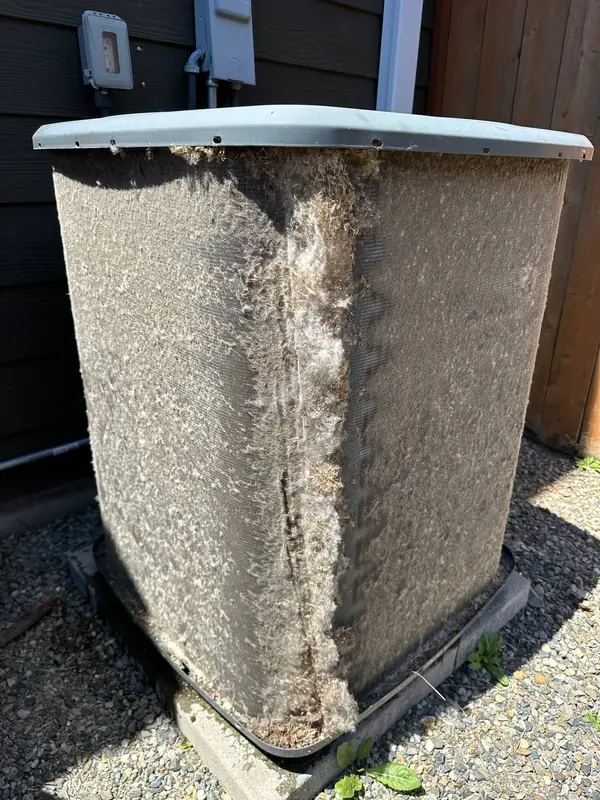
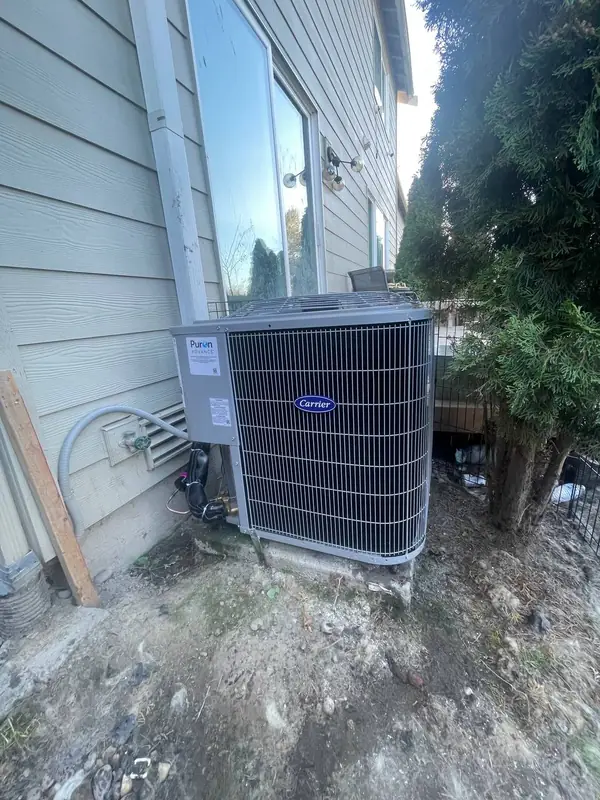
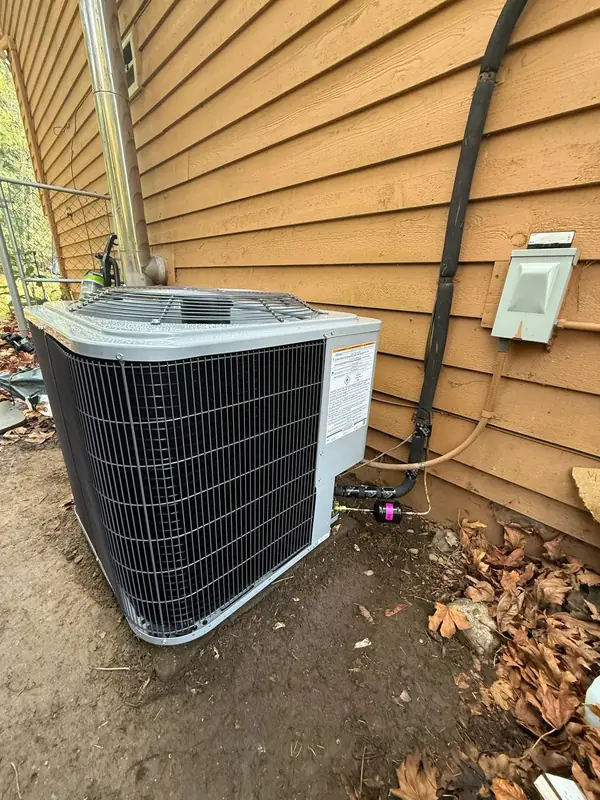
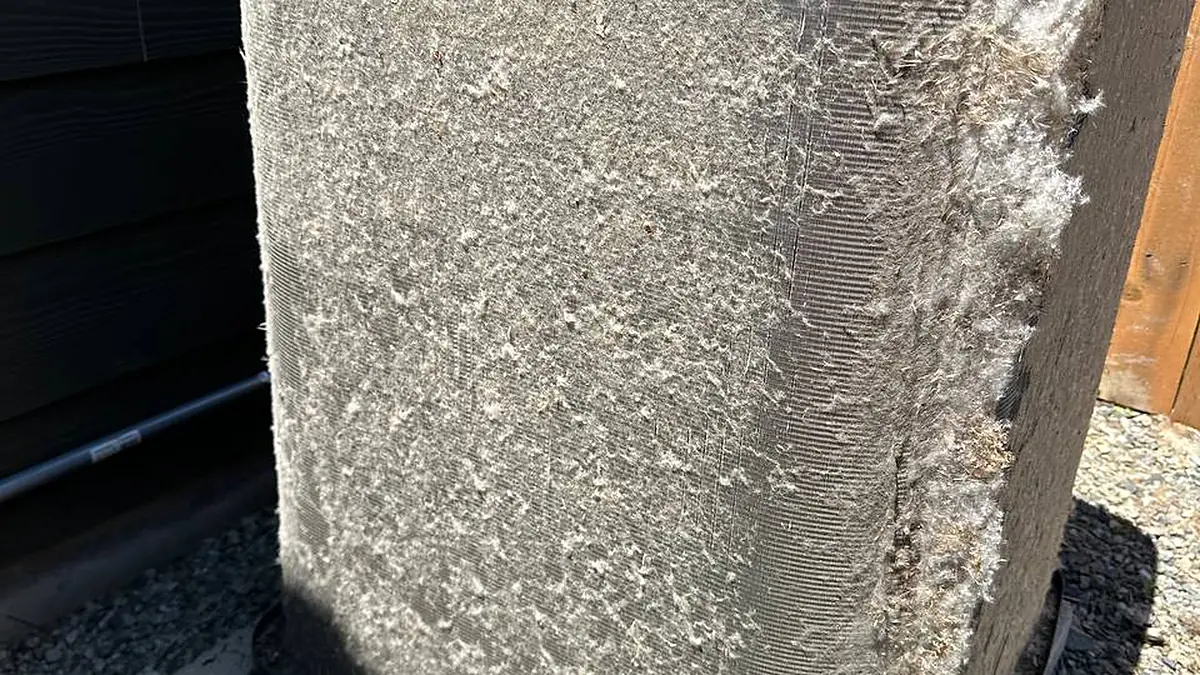
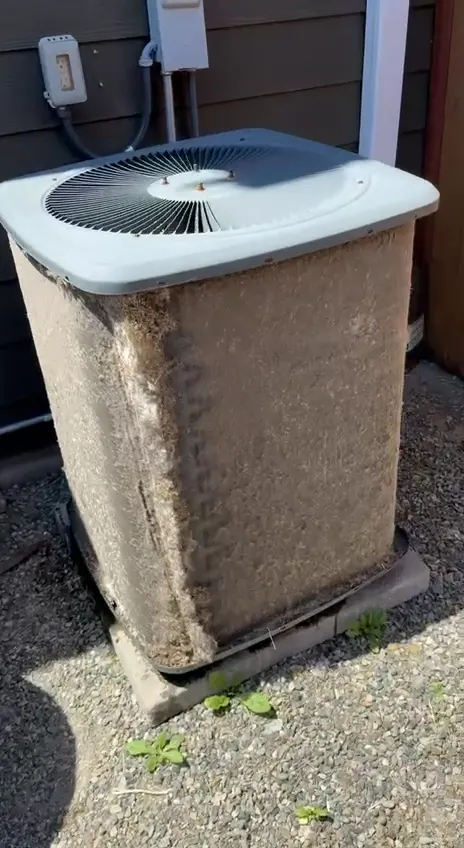 Video: Spanaway: The clogged coilThe Carrier outdoor unit as we found it, its coil covered in fluff on every side, before we washed it.Watch it on its own page
I am Eric. Winter in the Puget Sound is hard on outdoor units in a specific way: not deep cold, but wet leaves, wind-blown debris and months of damp air. Here is what I check on a maintenance visit and what you can do between visits.
What is normal in winter
Steam from the outdoor unit
On a cold, damp morning frost builds up on the outdoor coil. The heat pump melts it by briefly running in reverse. During those few minutes the outdoor fan stops, you may see steam rising from the unit and hear a whoosh when it switches back. That is the defrost cycle working. The water that drips off is melted frost.
Short pauses in warm air
During defrost the system may blow cooler air or pause for a few minutes. An all electric system brings its backup heater on to cover the gap.
Running for long stretches
On cold days a heat pump runs longer, steadier cycles than a furnace. Long run times on their own are not a problem.
What is not normal
- Ice that stays on the coil for hours, or a solid block of ice on the unit.
- The outdoor fan running while the coil stays covered in ice.
- The house never reaching the set temperature on an ordinary day.
- Air from the vents that stays cool for more than a few minutes outside a defrost.
Any of these is worth a call. Most of the time the cause is airflow: a dirty filter inside, or a blocked coil outside.
The coil that stopped heating
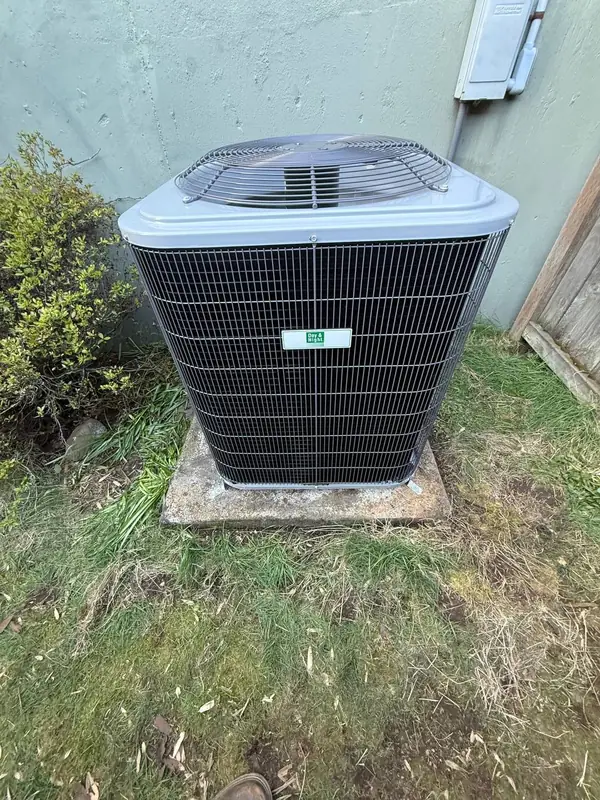
On a maintenance call in Spanaway the homeowner told us the Carrier heat pump was heating poorly. The outdoor coil was completely covered in fluff and dirt, so air could barely pass through it. We washed the coil until the fins were clear, and the system heated properly again.
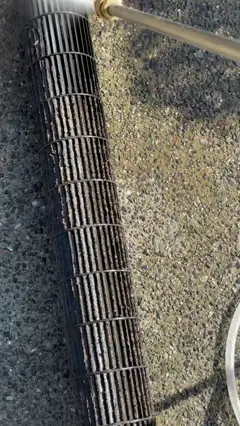 Video: Washing down the outdoor coilA maintenance visit, filmed on the job: the outdoor coil gets washed down until the fins are clear. A blocked coil is the most common reason a system runs hot and costs more than it should.Watch it on its own page
A clogged coil makes the heat pump work harder for less heat and pushes it into defrost more often. It builds up slowly, so it is easy to miss until the house feels cold.
What you can do between visits
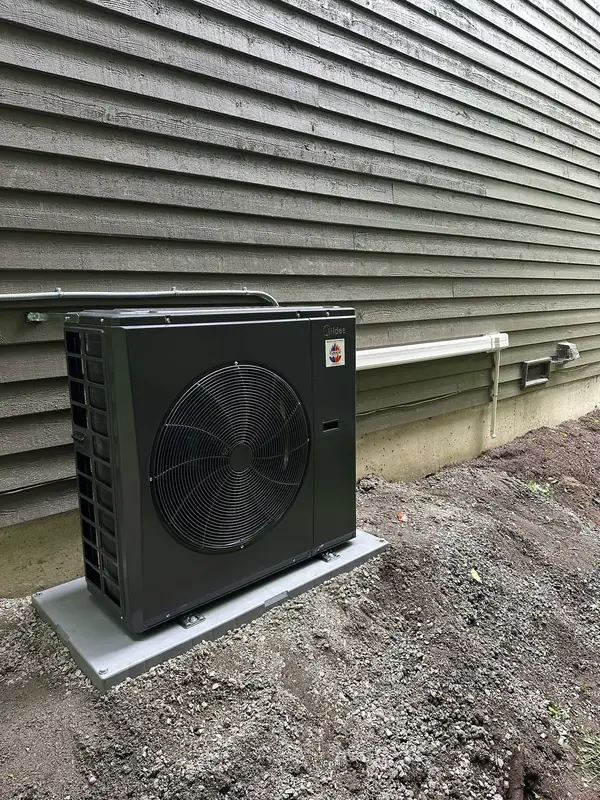
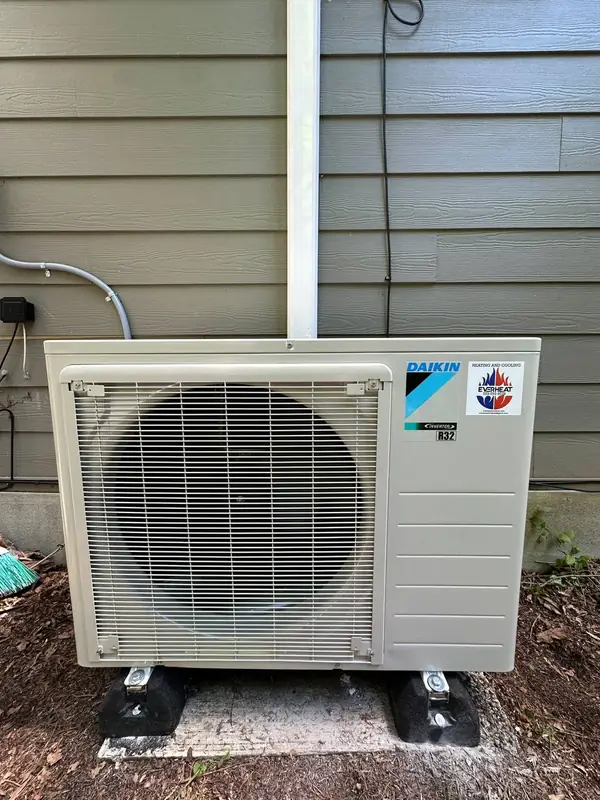
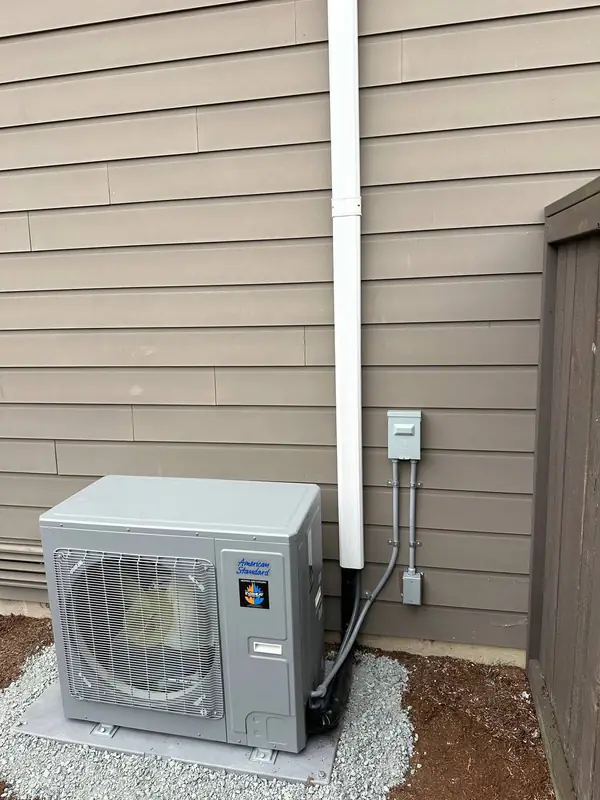
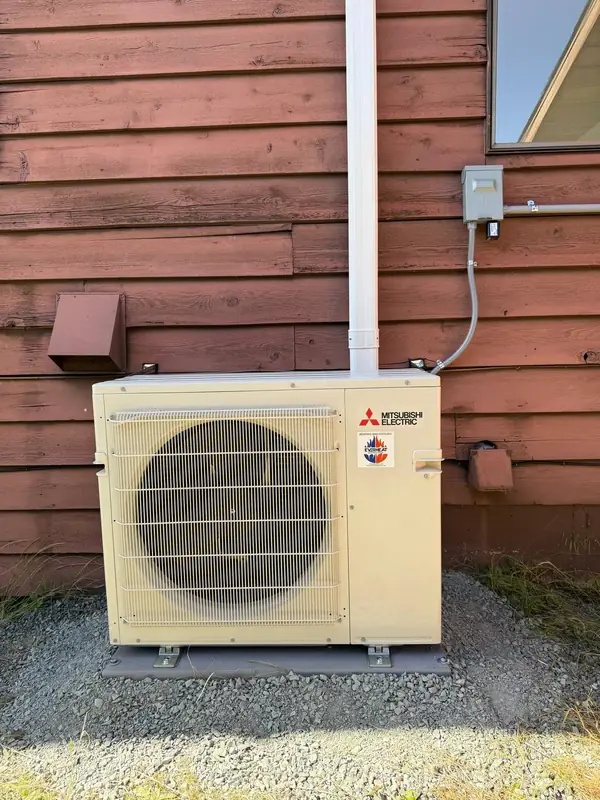
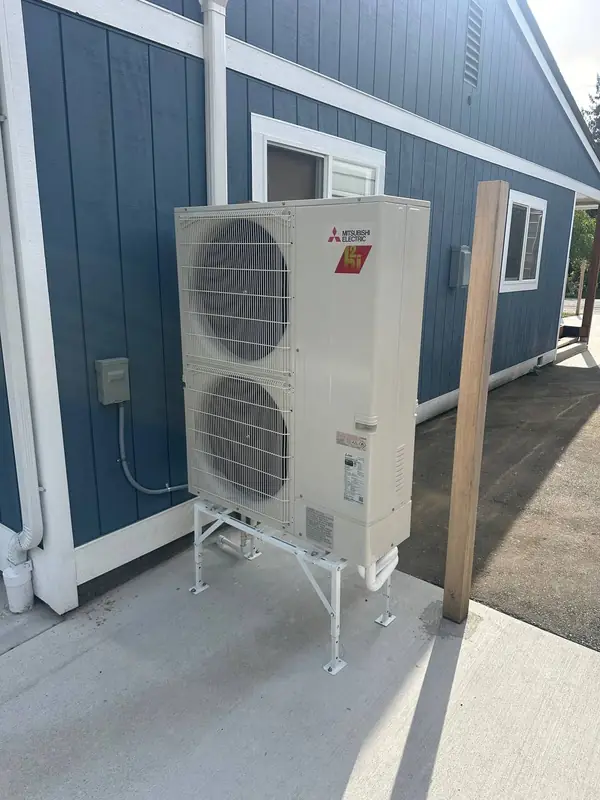
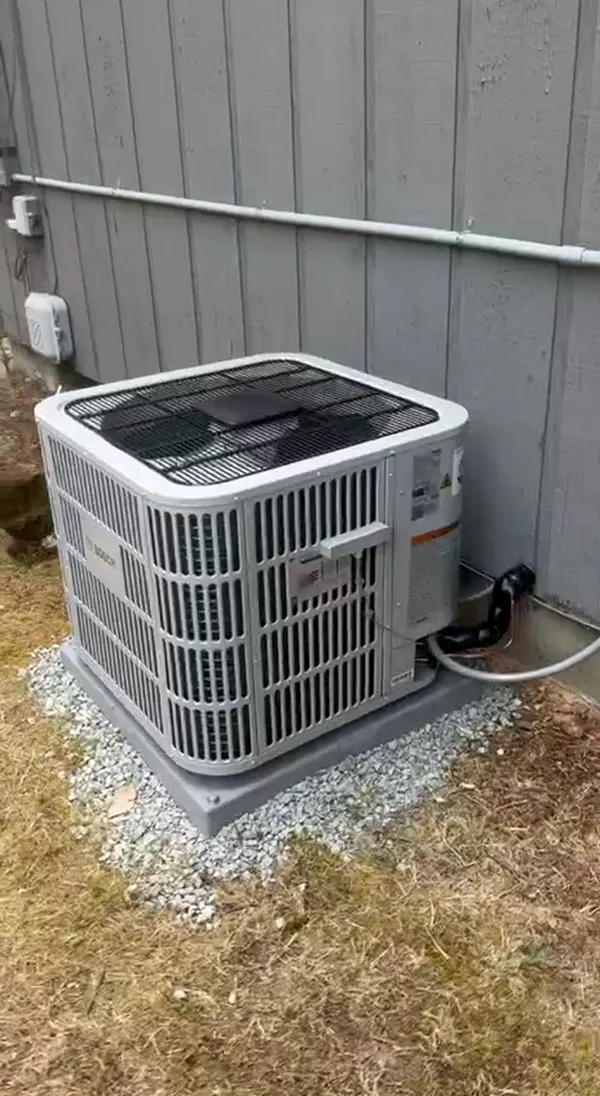
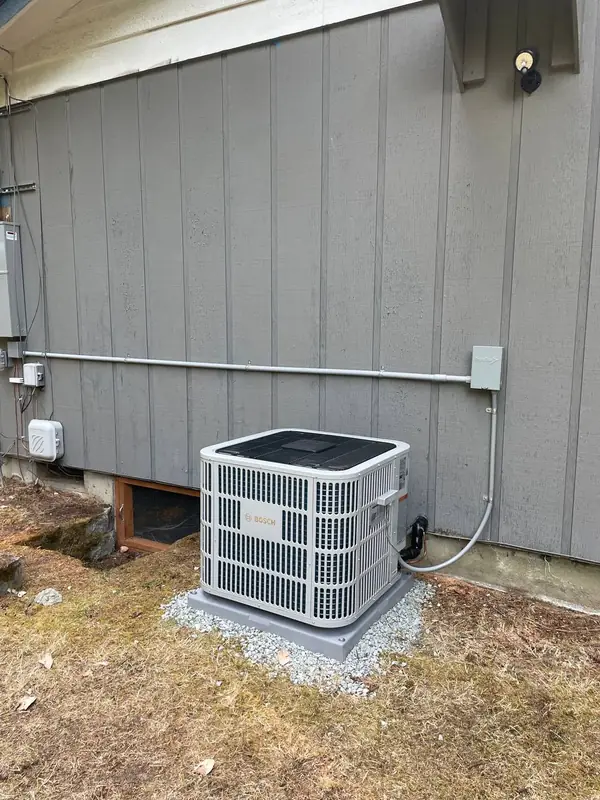
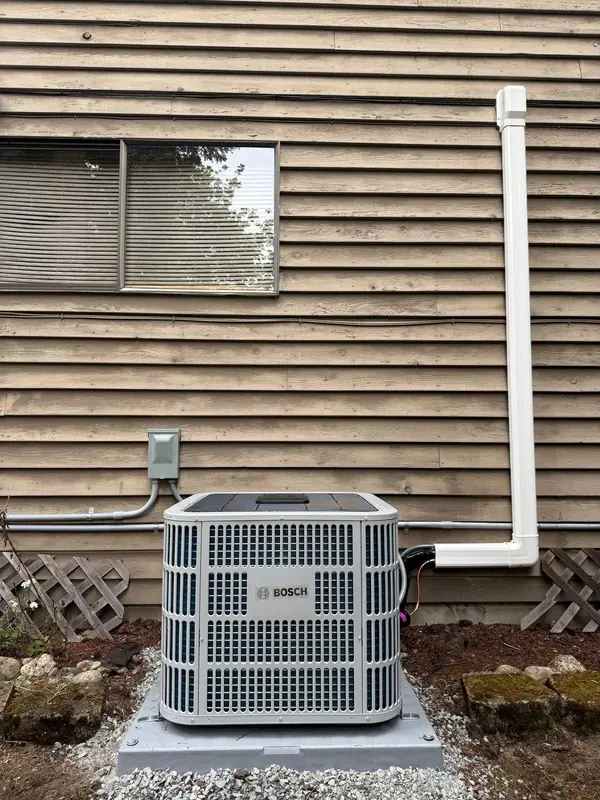
- Keep the area around the outdoor unit clear. Rake leaves away, trim shrubs back, and keep at least a couple of feet of open space around it.
- Clear debris from the top and sides with the system switched off at the thermostat. Pick off leaves and branches by hand.
- Do not cover the unit while it is in use. A heat pump runs all winter; a cover traps moisture and blocks the airflow it needs.
- Keep snow from piling against it after a rare snowfall, and make sure melt water can drain away from the base.
- Change the filter. For a ducted system with a furnace or air handler, every 3 to 4 months. For a ductless mini-split, rinse the filter behind the indoor unit's grille every 1 to 2 months.
Leave the coil washing, refrigerant checks and electrical work to a technician. The same routine is on our Lakewood job, where leaves pile up around the outdoor unit. Bent fins, a hard water jet or the wrong cleaner can damage the coil.
What a maintenance visit covers
Once a year we clean the coils, check refrigerant pressures, test the electrical side, including the capacitors, and set the thermostat before we leave. We explain what we found and what to keep an eye on.
| Option | Per system |
|---|---|
| One-time tune-up | $200 |
| Basic plan, 1 visit a year | $149 |
| Standard plan, 2 visits a year | $249 |
| Premium plan, 2 visits a year with priority | $349 |
These are starting prices; the final price is confirmed after we see the system.
Maintenance See your price range
A ten minute check before the first cold week
- Switch the thermostat to HEAT and raise it a few degrees. Warm air should reach the vents within a few minutes.
- Replace the thermostat batteries if it uses them.
- Look at the filter and change or rinse it.
- Walk around the outdoor unit: leaves, branches, anything leaning on it, and a clear path for melt water to drain away.
- Listen. A new rattle, grinding or loud buzzing is worth mentioning when you book the visit.
Mini-split owners: the indoor side
A ductless system has the same outdoor unit care as any heat pump, plus a few things inside:
- Rinse the filters behind each indoor unit's front grille every 1 to 2 months, let them dry and slide them back.
- Keep the air path clear. Curtains, shelves or furniture right under or in front of a wall unit block the air it needs.
- Watch the drain. Water dripping from an indoor unit, or a musty smell when it starts, means the drain or coil needs cleaning on the next visit.
For the two Mitsubishi ceiling cassettes we added in Federal Way, that is our advice too: filter every 1 to 2 months and one service visit a year.
If your system is dual fuel
With a heat pump on top of a gas furnace, the thermostat hands heating over to the furnace below a set outdoor temperature. Two things to know in winter:
- The furnace still needs its own care. A clean filter and a working flame sensor matter just as much as a clean outdoor coil. See Furnace Running but Not Heating for the furnace side.
- The switch-over point can be adjusted. If the furnace seems to run more than you expected, we can look at that setting on the next visit.
Why once a year is enough for most homes
A yearly visit catches the slow problems, a coil filling up, a capacitor getting weak or a drain starting to clog, before they turn into a cold night and an emergency call. Homes near trees that drop a lot of leaves or seed fluff may need the coil looked at more often.
Book the yearly visit
Book a maintenance visit or call +1 (253) 553-9579. If the heat pump is already struggling, the diagnostic visit is free.
FAQ
Should I cover my heat pump in winter?
No. A heat pump heats all winter and needs air moving through the outdoor coil. Covering it blocks the airflow and traps moisture.
Why is my heat pump steaming?
It is defrosting: melting frost off the outdoor coil. It lasts a few minutes and is normal on cold, damp days.
Why does my heat pump run all the time when it is cold?
Heat pumps run longer, steadier cycles than furnaces, especially on cold days. Constant running together with a cold house is the sign to call.
Can I wash the outdoor coil with a pressure washer?
No. High pressure bends the fins. Clearing leaves by hand is fine; leave the coil washing to us.
Related: Maintenance · Heat pumps · Repair and maintenance · Furnace not heating
What changed: October 25, 2026: Published. October 31, 2026: One-time tune-up is now $200 per system.
More guides like this
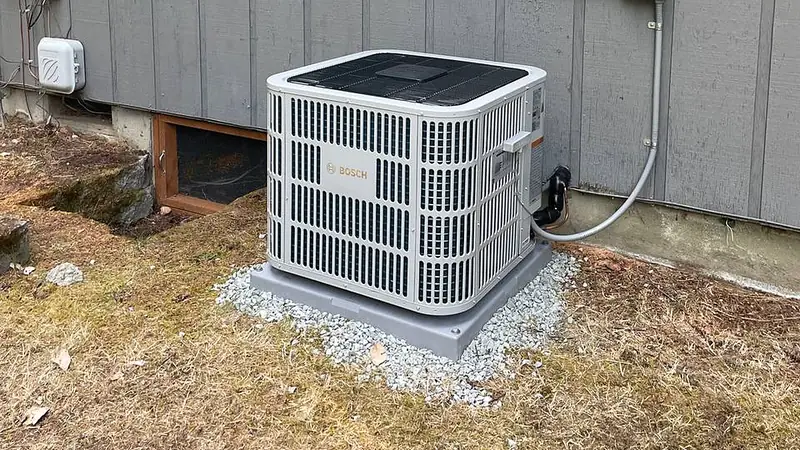 What a Heat Pump Costs in 2026, and What Changes the PriceA typical 3 ton heat pump job comes to about $8,000 installed. What that covers, the four lines that move it, and worked examples from our price list.Vlad, Owner · Updated October 31, 2026
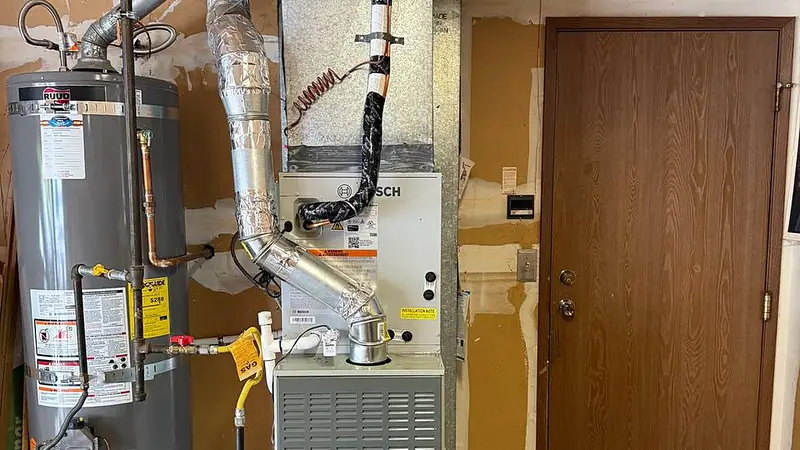 Heat Pump or Gas Furnace: Which One Fits Your Puget Sound HomeWhen a heat pump alone is enough, when a gas furnace still makes sense, and when the answer is both. Real installs, real prices, no sales pitch.Vlad, Owner · Updated October 26, 2026
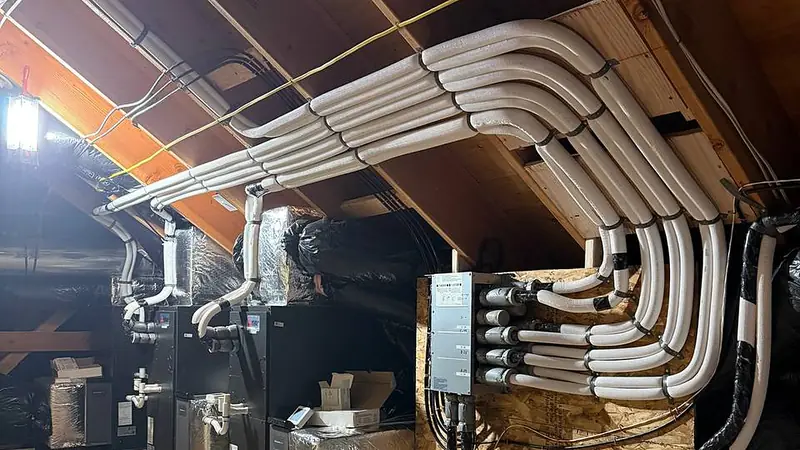 Mini-Split or Central Heat Pump: Which Fits Your Home?Ducts, rooms, zones and space decide it. How we choose between a ductless mini-split and a central heat pump, with prices and local installs.Vlad, Owner · Updated October 26, 2026