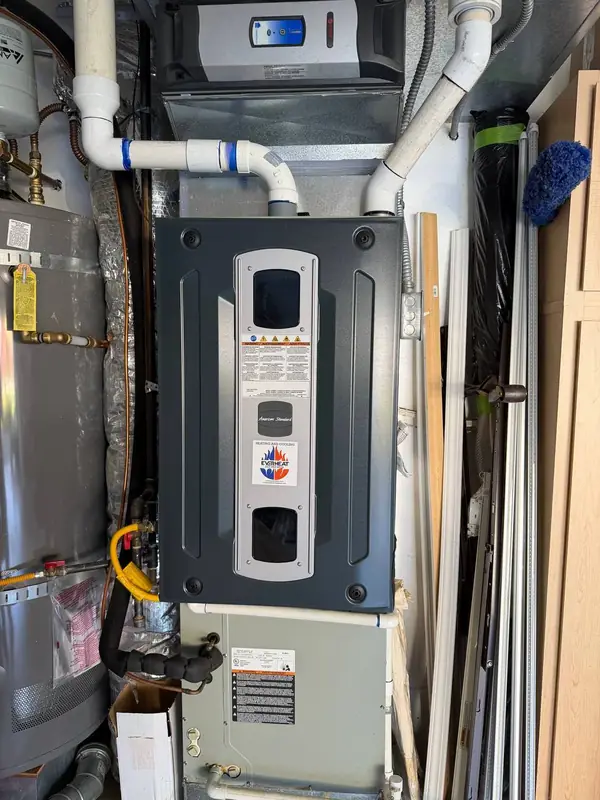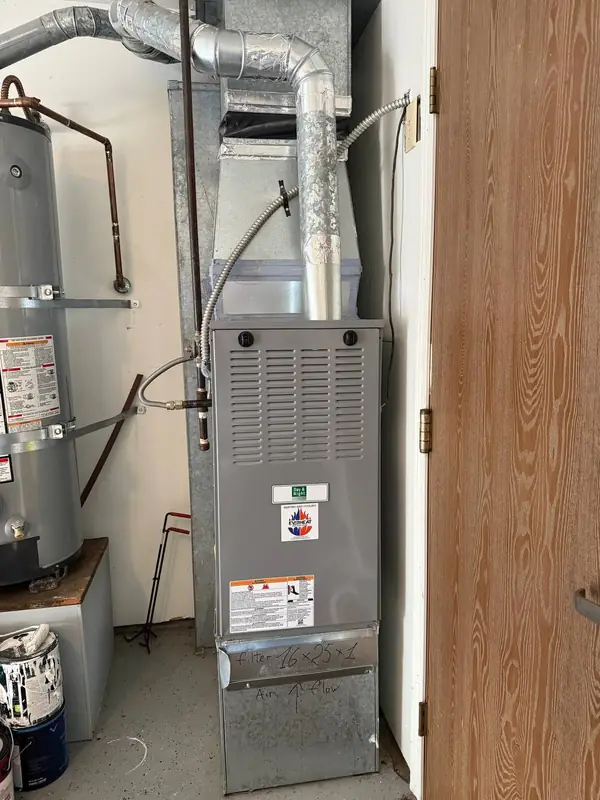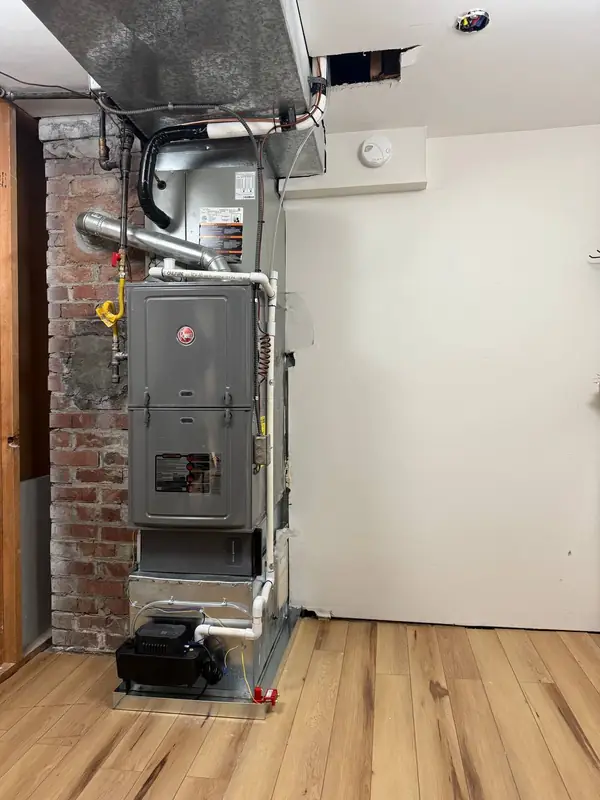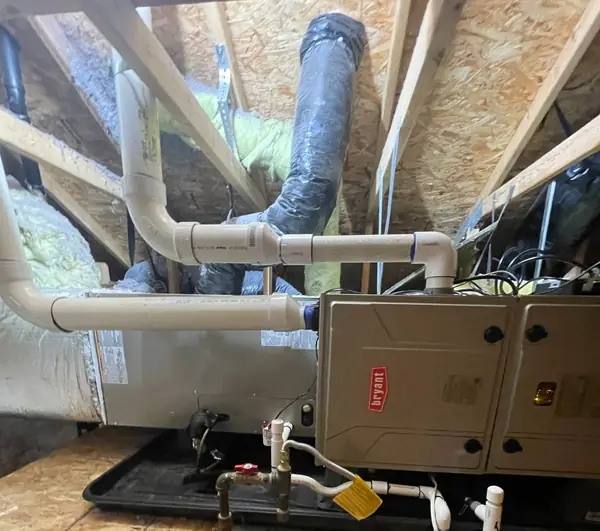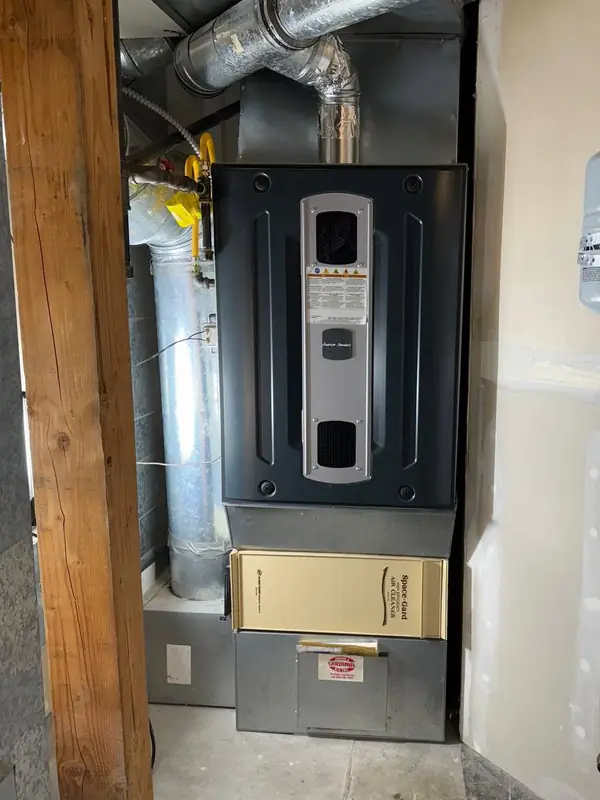
Furnace Running but Not Heating? 4 Checks Before You Call
Short answer. Check four things first: the air filter, the thermostat (batteries and settings), the gas supply to the furnace, and whether the blower actually starts. Start with these four: they are the quickest to rule out. If the house is still cold after that, the usual causes are a dirty flame sensor, a blower that will not start, a failed control board or a transformer, and those need a technician. Our diagnostic visit is free.
Key facts
- Diagnostic visit
- free
- Furnace not turning on
- $150 to $700 to repair
- Error code
- $150 to $550
- Noise
- $130 to $500
Prices from our published price list, valid through December 31, 2026. Your quote is itemized after a free in-home assessment.
I am Eric, one of our HVAC technicians. Here is the order I check things in when I walk into a cold house, and the part you can safely do yourself.
First, if you smell gas
Leave the house, do not switch lights or appliances on or off, and call your gas utility from outside. Everything below assumes there is no gas smell.
Check 1: the air filter
A clogged filter is the most common thing I find, and it causes a surprising range of symptoms. The furnace cannot move enough air, overheats, and its safety switch shuts the burners off. The blower keeps running to cool things down, so you feel air from the vents, but it is cold.
What to do: pull the filter out and hold it up to a light. If you cannot see light through it, replace it. Note the size printed on the frame. We recommend a fresh filter every 3 to 4 months for most systems, sooner if you have pets or have been doing dusty work.
Check 2: the thermostat
Two settings can make a working furnace seem to blow cold air:
- Fan set to ON instead of AUTO. With ON, the blower runs all the time, including between heating cycles, so you get room temperature air from the vents. Set it to AUTO.
- Mode not on HEAT, or the set point below room temperature. Obvious, but worth a look after a power outage or a new thermostat.
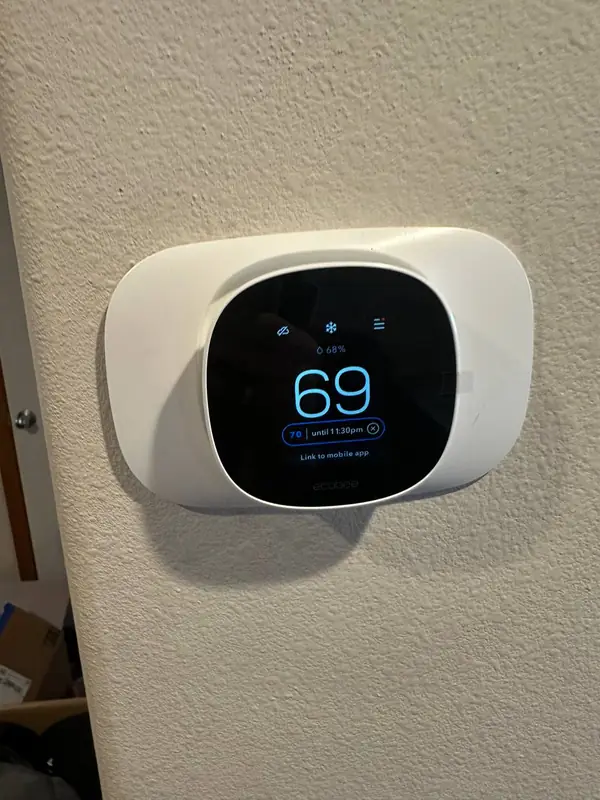
If the screen is blank or dim, replace the batteries. A thermostat with weak batteries can show the right numbers and still fail to call for heat.
Check 3: the gas supply
Find the gas valve on the pipe going into the furnace. The handle should run parallel to the pipe; across the pipe means closed. Also check whether your other gas appliances, like the water heater or a gas range, still work. If none of them do, the problem is the supply, not the furnace, and the call goes to your gas utility.
Check 4: does the blower start?
Set the thermostat a few degrees above room temperature and listen. Within a minute or two you should hear the inducer motor, then the burners lighting, then the main blower. Three patterns tell me a lot:
- Nothing at all. Check the furnace switch (it looks like a light switch on or near the unit) and the breaker. If both are on and the furnace is silent, it is often the control board or the transformer.
- It tries to light, runs a few seconds, then shuts off and tries again. Classic sign of a dirty flame sensor.
- Burners light, but the main blower never starts. The blower motor or its capacitor.
Do not open the burner compartment or bypass any switch. Those safeties are there for a reason.
What usually fails
From the furnaces we diagnose most often, in rough order:
- Dirty filter, causing overheating and shutdowns.
- Flame sensor, coated so the furnace cannot confirm a flame and shuts off.
- Blower that will not start, from the motor or its capacitor.
- Control board, the furnace's brain, which can fail after a surge or simply with age.
- Transformer, which powers the controls; when it goes, the furnace goes silent.
What a repair costs
The diagnostic visit is free: we find the cause, tell you the price, and you decide. You pay only for the repair itself.
| Problem | Typical range in our calculator |
|---|---|
| Furnace not turning on | $150 to $700 |
| Furnace making noise | $130 to $500 |
| Error code on the furnace | $150 to $550 |
Most repairs on any system fall between $200 and $2,000 depending on the part. Check your range online before you call.
What I do when I arrive
So you know what you are paying for, this is the order of a no-heat visit:
- Confirm the call for heat. I check that the thermostat is actually asking the furnace to run, at the thermostat and at the furnace's control board.
- Read the board. Most modern furnaces blink a status light in a pattern. That code narrows the fault down to a few parts before anything is taken apart.
- Watch a full start. Inducer, ignition, flame, blower. Where the sequence stops tells me which part to test.
- Test, then quote. I test the suspected part instead of guessing, then give you the price for the repair before doing it. If you say no, you owe nothing for the visit.
- Check the rest while I am there. Filter, flame, airflow and safety switches, so the repair is not followed by a second call a week later.
What to tell us when you call
A few details help us bring the right parts and often fix it in one trip:
- What it is doing: no air at all, cold air, short bursts of heat, or a noise.
- The brand and roughly how old it is, from the label inside the front panel if you can see it.
- Any blinking light pattern on the board, visible through the small window on many furnaces.
- What you already tried from the checks above.
If you have a heat pump instead
A heat pump that runs but does not heat well is a different story: more often a blocked outdoor coil, a dirty filter or a defrost question. We cover that in Heat Pump Care in a Wet Winter.
When repair stops making sense
If the same fault keeps coming back, or the furnace is 15 years old or more, a replacement is often the better money. In one Tacoma home the heating had been failing for more than a year despite repeated repair visits from other companies; once we traced the real cause, replacing the system was the honest answer. We walk through that decision in Repair or Replace Your Furnace.
Still cold?
Book a free diagnostic visit or call +1 (253) 553-9579.
FAQ
Why does my furnace blow cold air and then shut off?
Most often it is overheating from a blocked filter or a burner that will not stay lit because of a dirty flame sensor. Replace the filter first; if it repeats, the flame sensor needs cleaning by a technician.
Is it safe to reset the furnace myself?
Turning the furnace switch off for 30 seconds and back on is fine once. If it fails again, stop there: repeated resets can hide a real fault.
My furnace is new. Why is it blowing cold air?
On a new furnace check the fan setting on the thermostat first, then the filter. If both are right, call the installer; a new system should not do this.
How quickly can you come out?
We arrive at a time agreed in advance, often the same day once a time is set. We are 30 to 60 minutes from any city we serve.
Do you fix furnaces you did not install?
Yes, any brand, including systems installed by someone else.
Related: Heating repair · Repair and maintenance · Furnaces · Heat pump care in a wet winter
What changed: October 25, 2026: Published.