Mini-Split or Central Heat Pump: Which Fits Your Home?
Short answer. If your home has ducts in usable shape and you want one even temperature everywhere, a central heat pump is usually the better fit. If there are no ducts, you are heating an addition, an office or a few rooms that never feel right, or you want each room on its own setting, a ductless mini-split is usually better. Both are heat pumps: they heat and cool with the same technology. The difference is how the air gets to the rooms.
Key facts
- Mini-split, 1 zone
- from $4,600 installed
- Mini-split, 2 zones
- from $6,100
- Central heat pump, 3 ton
- from $7,500
- Ceiling cassette
- +$700 per zone
- Assessment
- free, in your home
Prices from our published price list, valid through December 31, 2026. Your quote is itemized after a free in-home assessment.
Every house is different, and this is the choice we talk through most often at assessments. Here is how we make it.
The real difference: ducts and zones
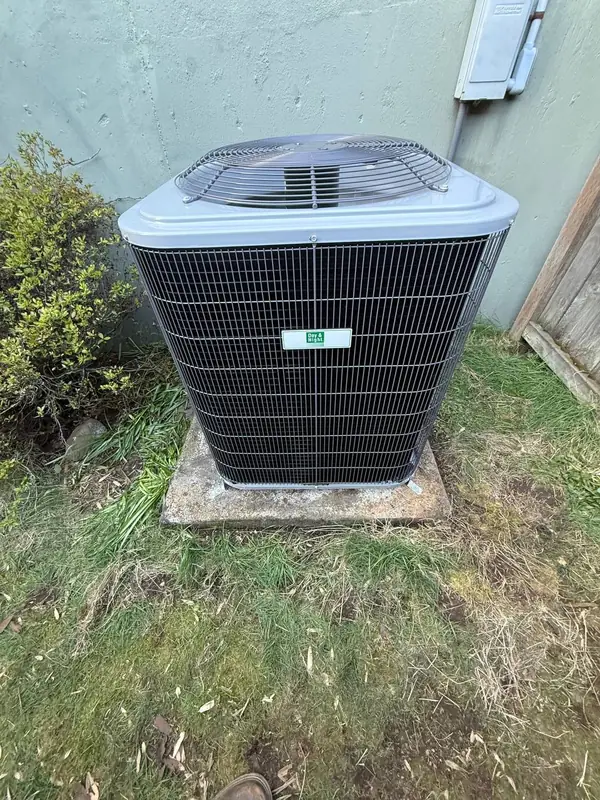
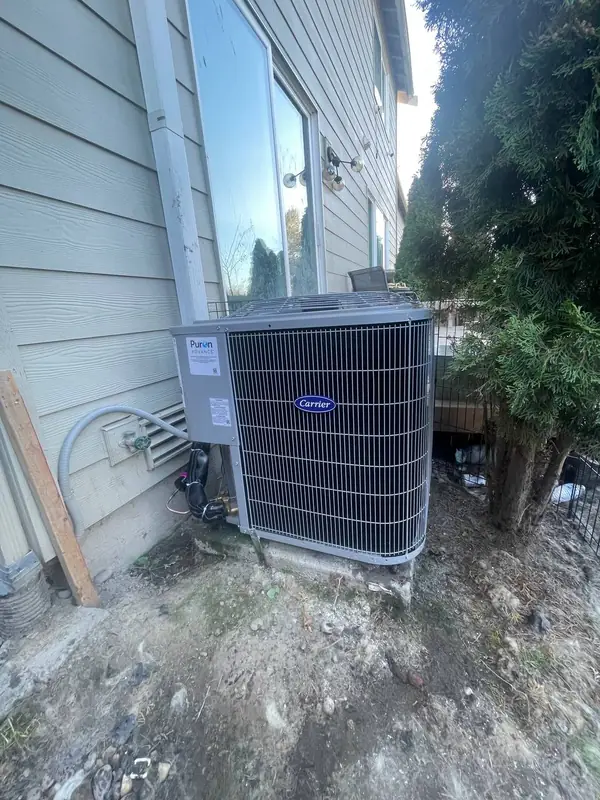
A central heat pump has one outdoor unit and one indoor air handler (or your furnace). Warm or cool air goes through the existing ducts to every room, and one thermostat controls the whole house. A central system does not control rooms separately.
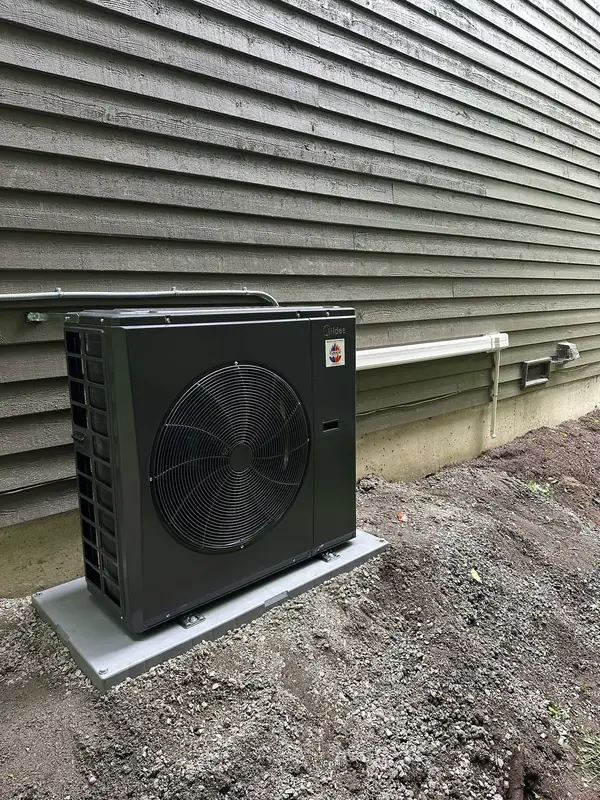
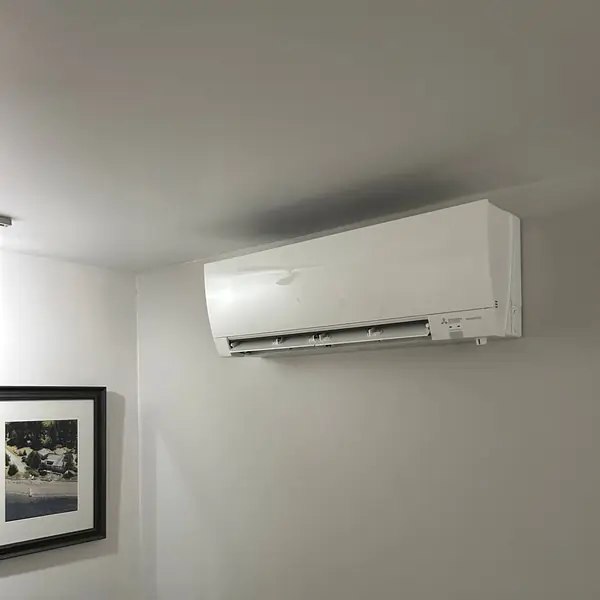
A ductless mini-split has an outdoor unit and one or more indoor units mounted in the rooms themselves: a wall unit, a ceiling cassette or a concealed unit with a short duct. Each indoor unit has its own control. That is the zoning a central system cannot give you.
When a central heat pump wins
- You already have ducts in good shape from a furnace or an old system.
- You want the whole house at one temperature, with nothing mounted on the walls.
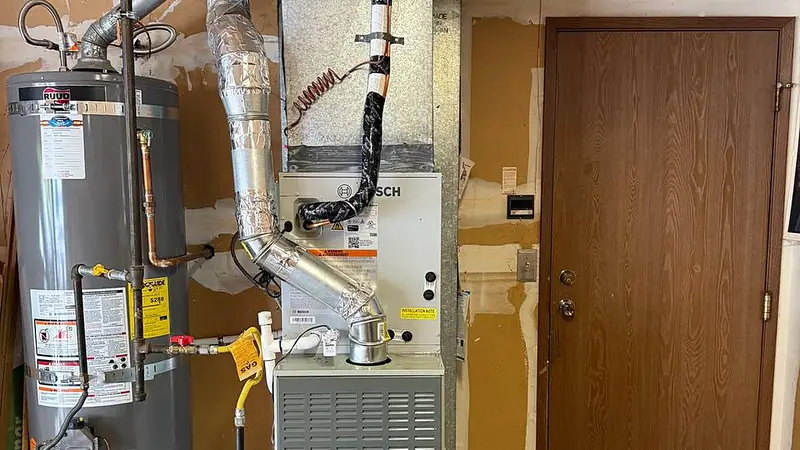
- You have a gas furnace you want to keep. A central heat pump can sit on top of it as a dual fuel system.
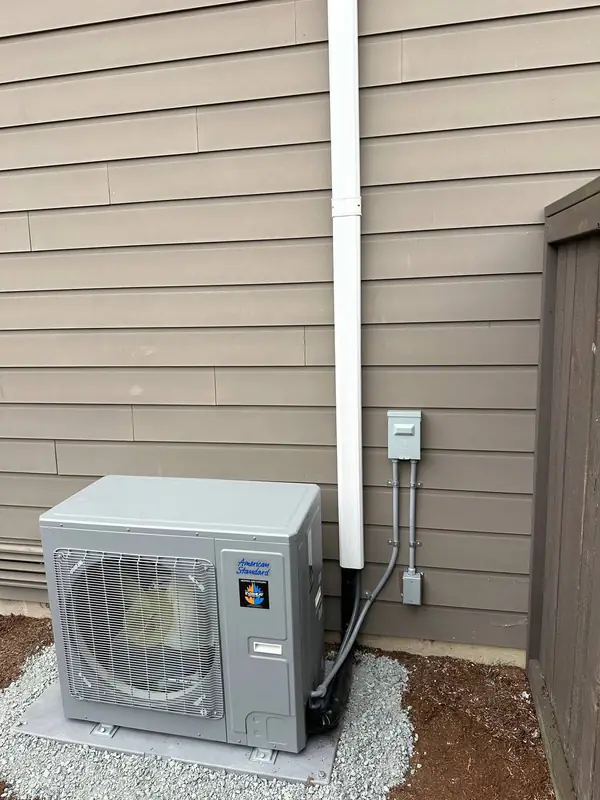
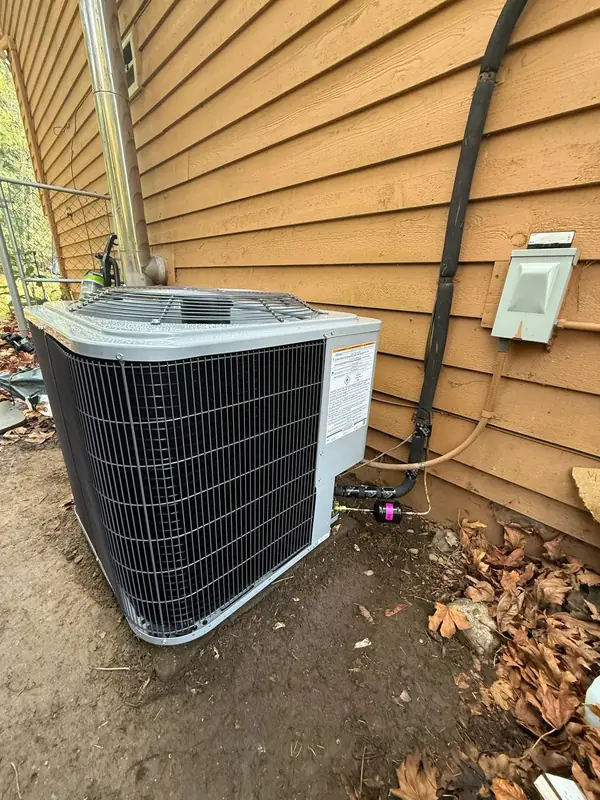
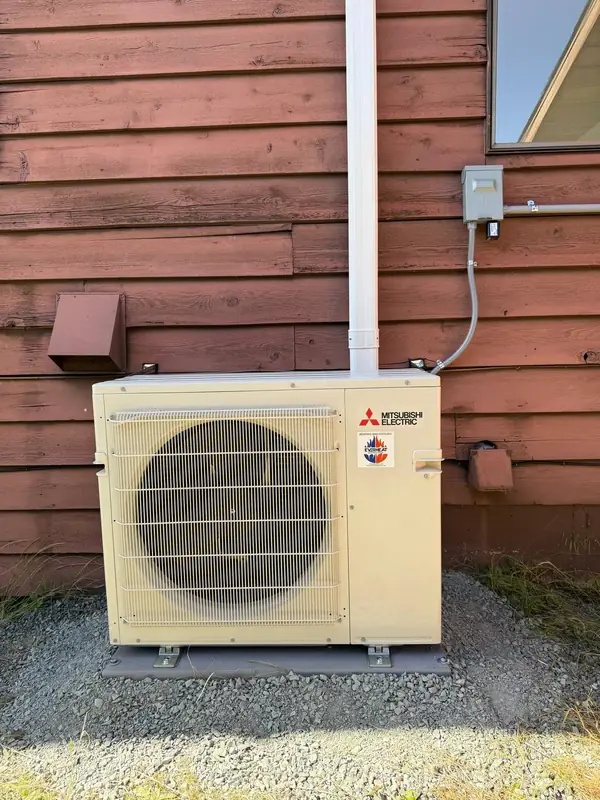
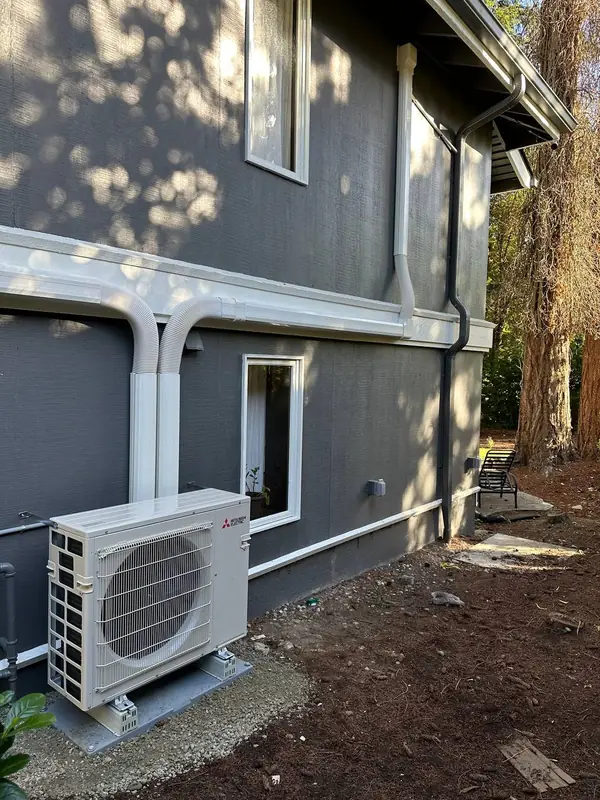
In Bothell we added an American Standard heat pump and coil to an existing gas furnace. In Shoreline a Mitsubishi heat pump with an air handler in the crawl space replaced old electric heaters and now heats and cools the whole house through ducts.
When a mini-split wins
- No ducts, or ducts that would cost more to fix than they are worth.
- One space with its own needs: a home office, a workshop, a bonus room, an addition, a garage conversion.
- Rooms that fight each other: the upstairs bedroom that bakes in July while the basement stays cold.
- Adding cooling or extra heat without touching the furnace.
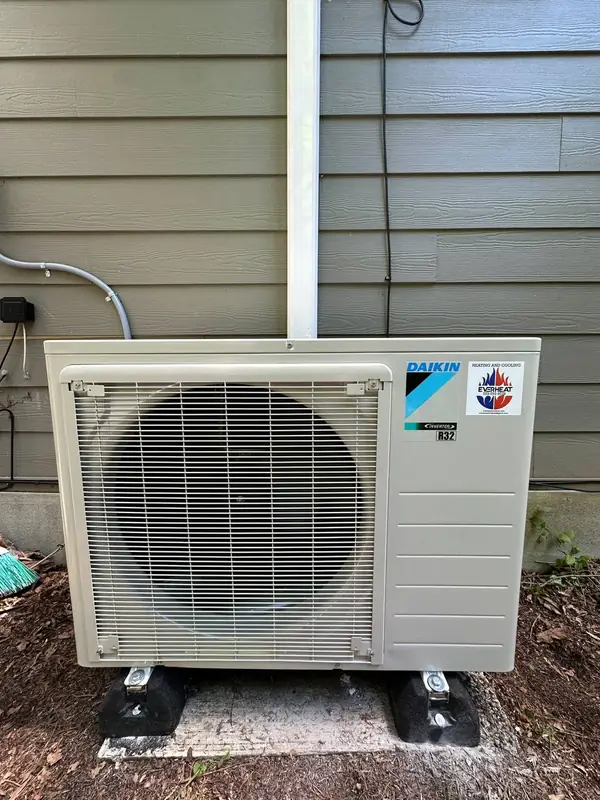
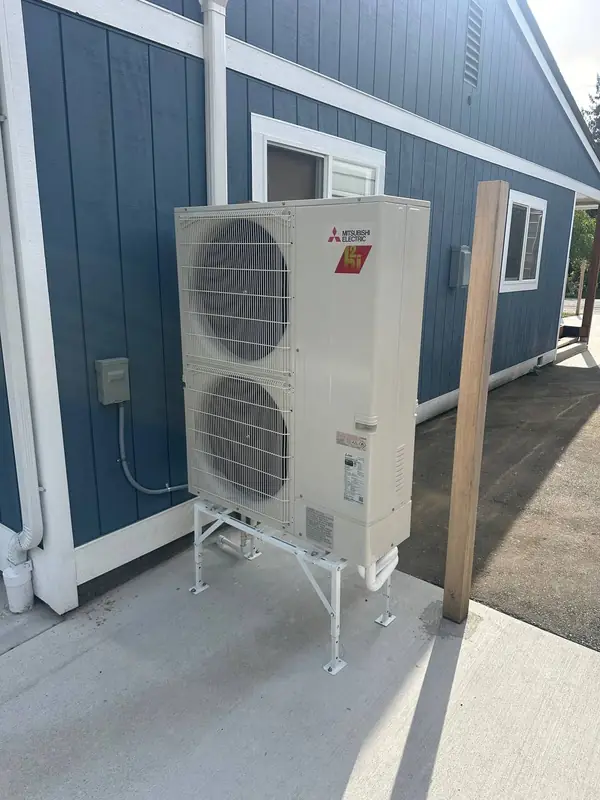
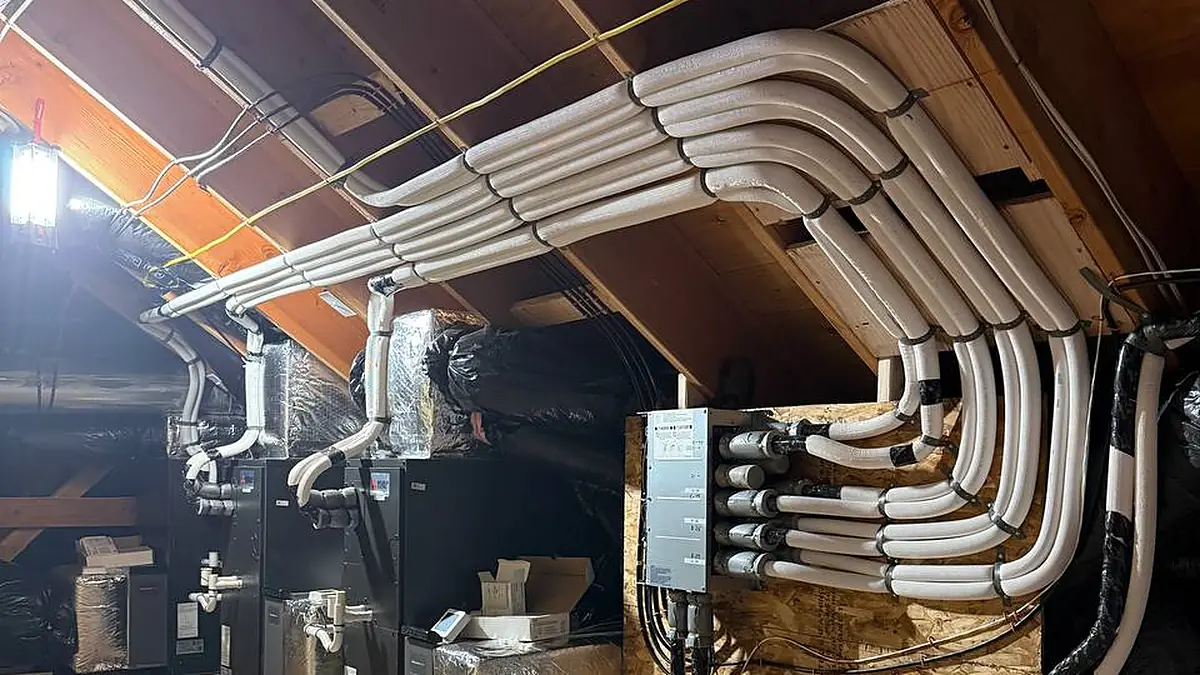
In Kirkland a single Daikin mini-split now heats and cools an office and workshop space. In Federal Way, at our suggestion, two Mitsubishi ceiling cassettes were added to a home that keeps its existing furnace. In Seattle a Mitsubishi multi-zone system feeds five indoor units from branch boxes.
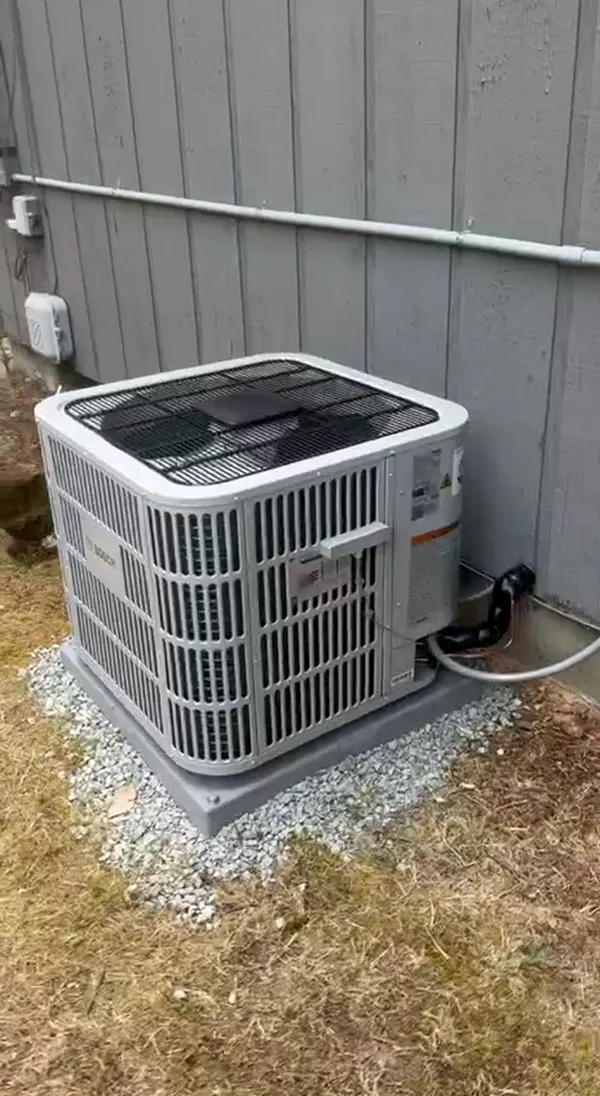
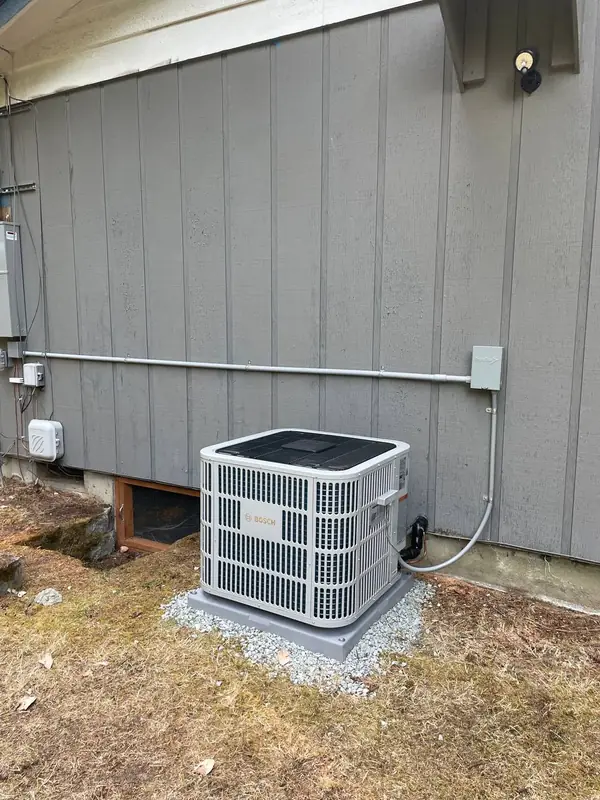
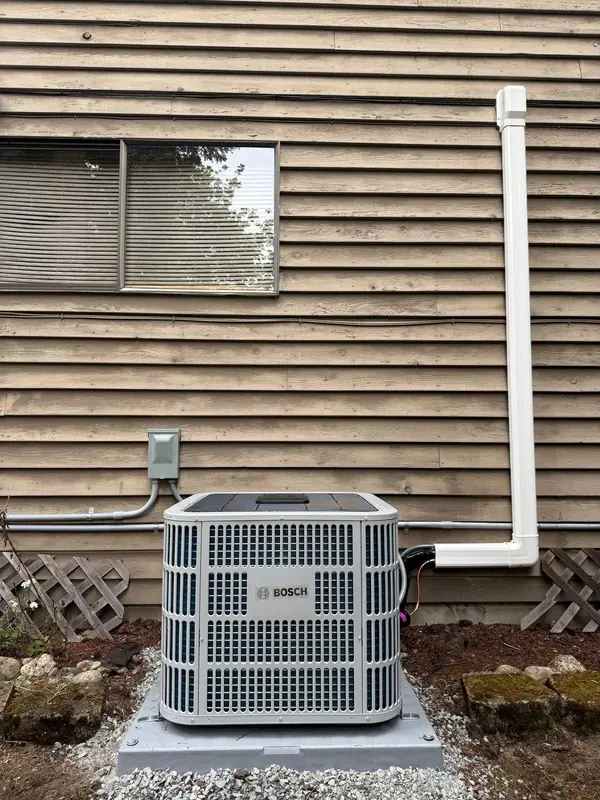
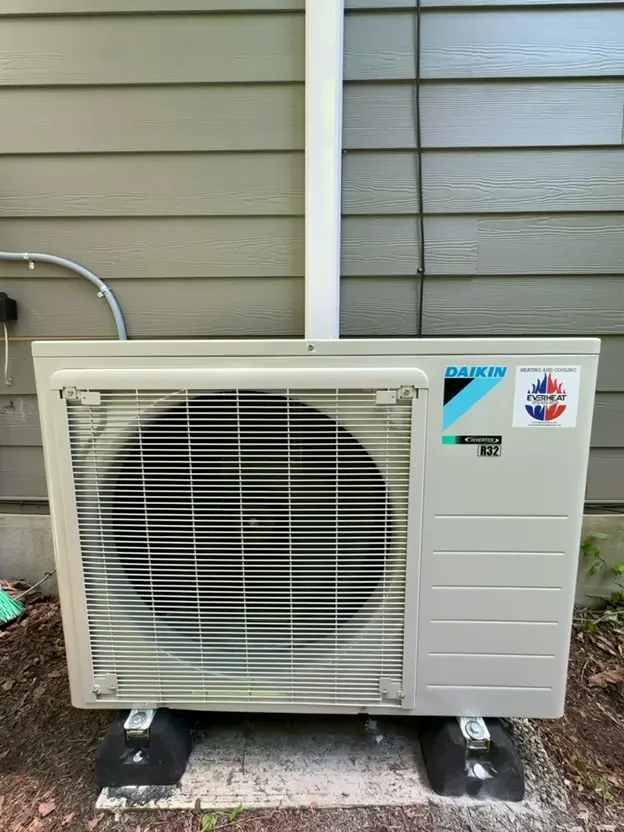 Video: Kirkland: The finished outdoor unitThe Daikin outdoor unit on its stand, finished.Watch it on its own page
What each one costs
Starting prices from our published price list, installed:
| System | Starting price |
|---|---|
| Mini-split, 1 zone | from $4,600 |
| Mini-split, 2 zones | from $8,100 new, $6,100 as a replacement |
| Mini-split, 3 zones | from $11,100 new, $7,600 as a replacement |
| Ceiling cassette instead of a wall unit | +$700 per zone |
| Central heat pump, 3 ton | from $7,500 |
| 240V circuit for a new system | +$1,400 |
Ductless is priced by the number of zones, so the size of the home does not change a mini-split price. A central heat pump is priced by tonnage, from 2 to 5 tons. From two zones up, a new mini-split install costs more than a replacement, because new line sets have to be run through the house.
Ductless Mini-Split Cost Heat Pump Cost
Space: what has to fit where
Both systems need an outdoor unit on a pad or a wall bracket with clear air around it, and a route for the refrigerant line set.
- Central: the air handler needs a home. In our jobs it has been a closet in Seattle, a garage in Tacoma and a crawl space in Shoreline.
- Mini-split: each indoor unit needs a spot on an outside wall or the ceiling where the line set can run without cutting through a finished room. We plan that route at the assessment, and the line sets go under covers on the outside wall.
How many indoor units does a house need?
As a rule, one per room or open area you want to control on its own. You can start with one or two zones for the rooms that bother you most and add more later. We work out zones at the free assessment, not over the phone, because it depends on the layout, the windows and how you use the space.
Can you have both?
Yes. A home can keep a central system for the main floor and add a mini-split for an addition or a bonus room. The Federal Way job above is exactly that: cassettes added next to an existing furnace, each doing what it is good at.
Looks, upkeep and day to day use
- What you see. A central heat pump hides indoors; you see only supply grilles, as with a furnace. A mini-split puts a unit in each room: a wall unit, a ceiling cassette, or a concealed unit with a short duct if you would rather not see it.
- Filters. A central system has one filter at the air handler or furnace, changed every 3 to 4 months. Each mini-split indoor unit has its own washable filter behind the grille, rinsed every 1 to 2 months.
- Service. Both need one maintenance visit a year: coils cleaned, pressures checked, electrical tested.
- Control. One thermostat for a central system; a remote or wall control per zone for a mini-split, so a guest room can sit idle while the office stays warm.
Before the assessment: four questions to think about
- Which rooms bother you most, and in which season?
- Do you want the whole house at one setting, or rooms on their own?
- Do you have gas and a furnace you want to keep?
- Are there walls or ceilings you would not want a unit on?
Your answers, plus what we see in the house, make the choice clear at the assessment.
Quick comparison
| Central heat pump | Mini-split | |
|---|---|---|
| Needs ducts | Yes | No |
| Room by room control | No | Yes |
| Indoor equipment | One air handler, hidden | A unit in each zone |
| Priced by | Tons | Zones |
| Best for | Whole house on existing ducts | No ducts, additions, problem rooms |
See it in your house
Book a free in-home assessment and we will show you where each option would go. Or see your price range online.
FAQ
Are mini-splits worth it?
Where there are no ducts or a few rooms need their own control, yes: they heat and cool those rooms efficiently without any ductwork. For a whole house that already has good ducts, a central heat pump is usually the better value.
Can a mini-split work alongside my gas furnace?
Yes. The furnace keeps heating the house through the ducts, and the mini-split covers the rooms it does not reach well.
What size mini-split do I need?
Indoor units come in several capacities, and the right one depends on the room, its windows and insulation. We size each zone during the assessment.
Is a ceiling cassette better than a wall unit?
It spreads air in several directions and keeps the walls clear. It costs $700 more per zone than a wall unit.
Does every room need its own outdoor unit?
No. A multi-zone system runs several indoor units from one outdoor unit; in Seattle five indoor units run through branch boxes from the same system.
Related: Ductless mini-splits · Heat pumps · Mini-split installation cost · Heat pump or gas furnace
What changed: October 25, 2026: Published. October 26, 2026: Central heat pumps now come in 2 to 5 tons.
More guides like this
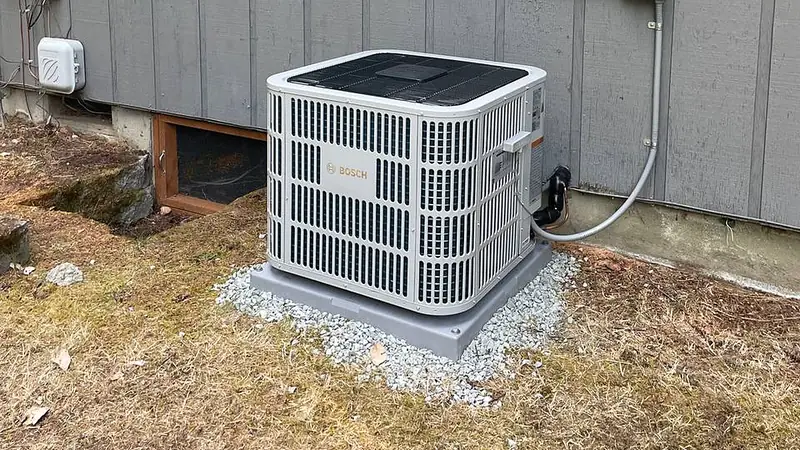 What a Heat Pump Costs in 2026, and What Changes the PriceA typical 3 ton heat pump job comes to about $8,000 installed. What that covers, the four lines that move it, and worked examples from our price list.Vlad, Owner · Updated October 31, 2026
 Heat Pump or Gas Furnace: Which One Fits Your Puget Sound HomeWhen a heat pump alone is enough, when a gas furnace still makes sense, and when the answer is both. Real installs, real prices, no sales pitch.Vlad, Owner · Updated October 26, 2026